


Research Articles
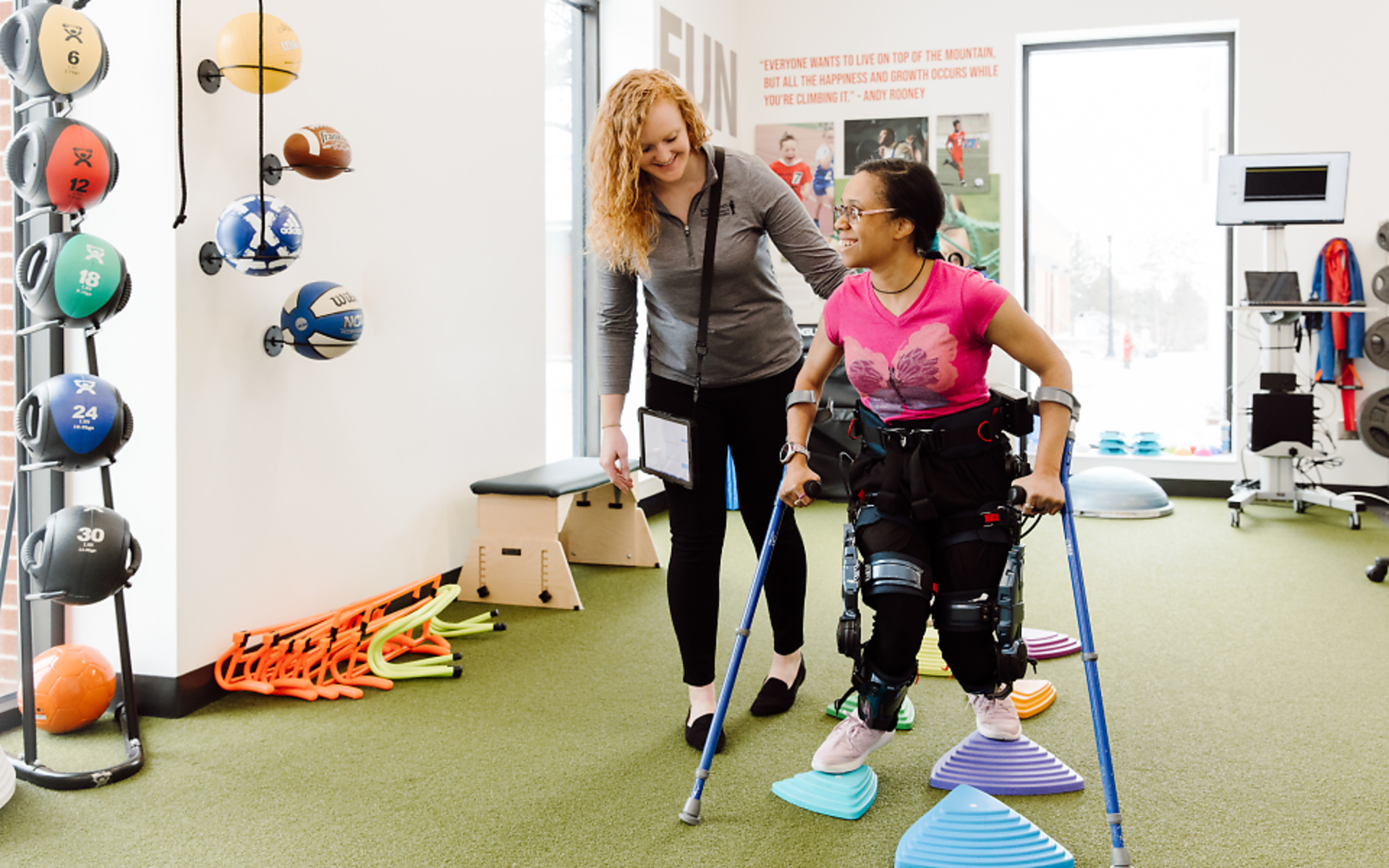
How Gait Training May Change Brain Activity in People with Cerebral Palsy
Reviewed by: Max Kurz, Ph.D.
Published: September 2026
Reading time: ~3 min
People with cerebral palsy often have differences in how their brains process visual information, and those differences can affect how they move.
A 2026 study from Boys Town National Research Hospital researchers examined whether a specific type of physical therapy could change that. The results were published in the journal Neuroscience.
What is cerebral palsy, and what does vision have to do with walking?
Cerebral palsy (CP) is a group of conditions that affect movement and motor skills. It is caused by differences in brain development, usually before or around birth. Prior research has shown that people with CP often have impairments in visual processing that can affect their motor actions. The occipital cortex, located at the back of the brain, plays a central role in processing visual information.
What did the study do?
The research team enrolled 29 people with CP between the ages of roughly 12 and 27 (average age 19.9 years) who had Gross Motor Classification System scores at Levels I through III. Each participant underwent 24 gait training sessions. The training used a paradigm that incorporated visuomotor tasks, meaning tasks that require coordinating vision and movement at the same time. A group of 34 neurotypical individuals served as a comparison group.
Before and after the gait training, researchers used magnetoencephalography (MEG) to image cortical activity in each participant. MEG measures tiny magnetic fields produced by brain activity and was used here specifically to measure how strongly the occipital cortex responded to a visual stimulus.
What did the researchers find?
Before therapy, the group with CP showed significantly weaker neural activity in the occipital cortices compared to the neurotypical controls. After the 24 sessions of gait training, the strength of that neural response increased.
The study also found that participants who showed a larger increase in occipital cortical activity tended to show the greatest improvements in preferred walking speed after therapy.
The researchers concluded that gait training paradigms that incorporate visuomotor tasks might have the potential to improve mobility as well as occipital cortical activity in people with CP.
Want to read the science yourself?
Kurz MJ, Dao E, Busboom MT, Heinrichs-Graham E, Corr B, Bemis KL, White L, Scott KS, Wilson TW. "Persons with cerebral palsy display improved occipital cortical entrainment after gait training." Neuroscience, 2026.
Published Article
The article of record on the publisher's website. DOI: 10.1121/10.0042364|
PubMed
PubMed is the National Library of Medicine's index of biomedical research, where you can view this publication's citation and abstract.
PubMed Central
PubMed Central is the National Library of Medicine's free full-text archive, where you can read the complete article.