

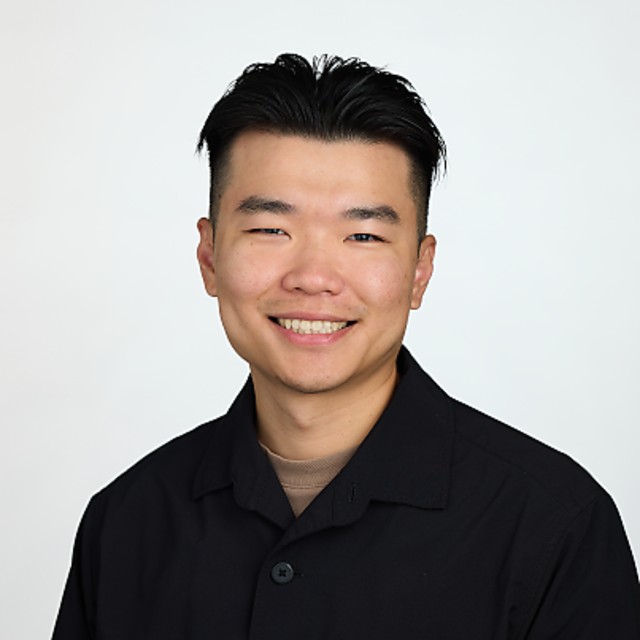
Yuefeng Huang, PhD, is the director of the Human Urges and Addiction Neuroimaging Group (HUANG Lab) in the Institute for Human Neuroscience at Boys Town National Research Hospital. Dr. Huang is a cognitive neuroscientist, and he studies the brain mechanisms underlying mental health, with a focus on addiction. His research examines how the brain assigns value to drug and non-drug rewards, how individuals with substance use disorder regulate their brain responses to drug cues, and how individual differences shape these neural mechanisms and, in turn, vulnerability and resilience. His work combines multimodal neuroimaging and non-invasive neuromodulation to study mechanism-informed interventions.
Dr. Huang has authored more than 20 peer-reviewed publications in high-impact journals, including JAMA Psychiatry, American Journal of Psychiatry, Biological Psychiatry, Annual Review of Psychology, and Nature Mental Health. Several of his publications have been highlighted in editorials and commentaries. His work has been recognized with awards from the American Society of Clinical Psychopharmacology (ASCP), the Society of Biological Psychiatry (SOBP), and the Society for Neuroscience (SfN), and he has presented his research in panel and research report sessions at the American College of Neuropsychopharmacology (ACNP) and ASCP.
He received his PhD from the University of Texas at Dallas, where he studied alcohol addiction and memory using non-invasive brain stimulation, fMRI, and EEG. As a postdoctoral fellow at the Icahn School of Medicine at Mount Sinai, he examined cortico-striatal mechanisms of drug cue-reactivity and its regulation; how biological sex, ovarian hormones, and inflammatory markers influence these mechanisms; and the neural effects of cognitively enhanced mindfulness-based and non-invasive neuromodulation interventions in substance use disorders.
His lab is expanding this work toward precision treatment and prevention across the lifespan, including in adolescents and young adults, using longitudinal, real-world assessment and large-cohort data to identify developmental windows for intervention. Ultimately, Dr. Huang aims to translate mechanistic insights into real-world impact that reduces the burden of addiction on individuals, families, and communities.